
Steel Arch Building Pricing: What Changes the Final Price?
If you’re shopping for a steel arch building (often called a Quonset hut), you’ve probably noticed one frustrating truth: two buildings that look “almost the same” online can end up thousands of dollars apart once you price them out properly. That’s because Quonset pricing isn’t just about the metal shell, it’s a full system that includes the structure, site conditions, delivery, and how “finished” you want the space to be.
In this guide, you’ll view Quonset building price ranges, understand Quonset kit pricing factors, get an estimate for Quonset structures in a clear, practical way without hype or confusing sales talk.
Quonset Building Pricing Guide: The Real Cost Range
A Quonset structure can be very affordable for basic storage, but it can also climb into “full building” pricing when you add insulation, utilities, interior finishing, and code-required upgrades.
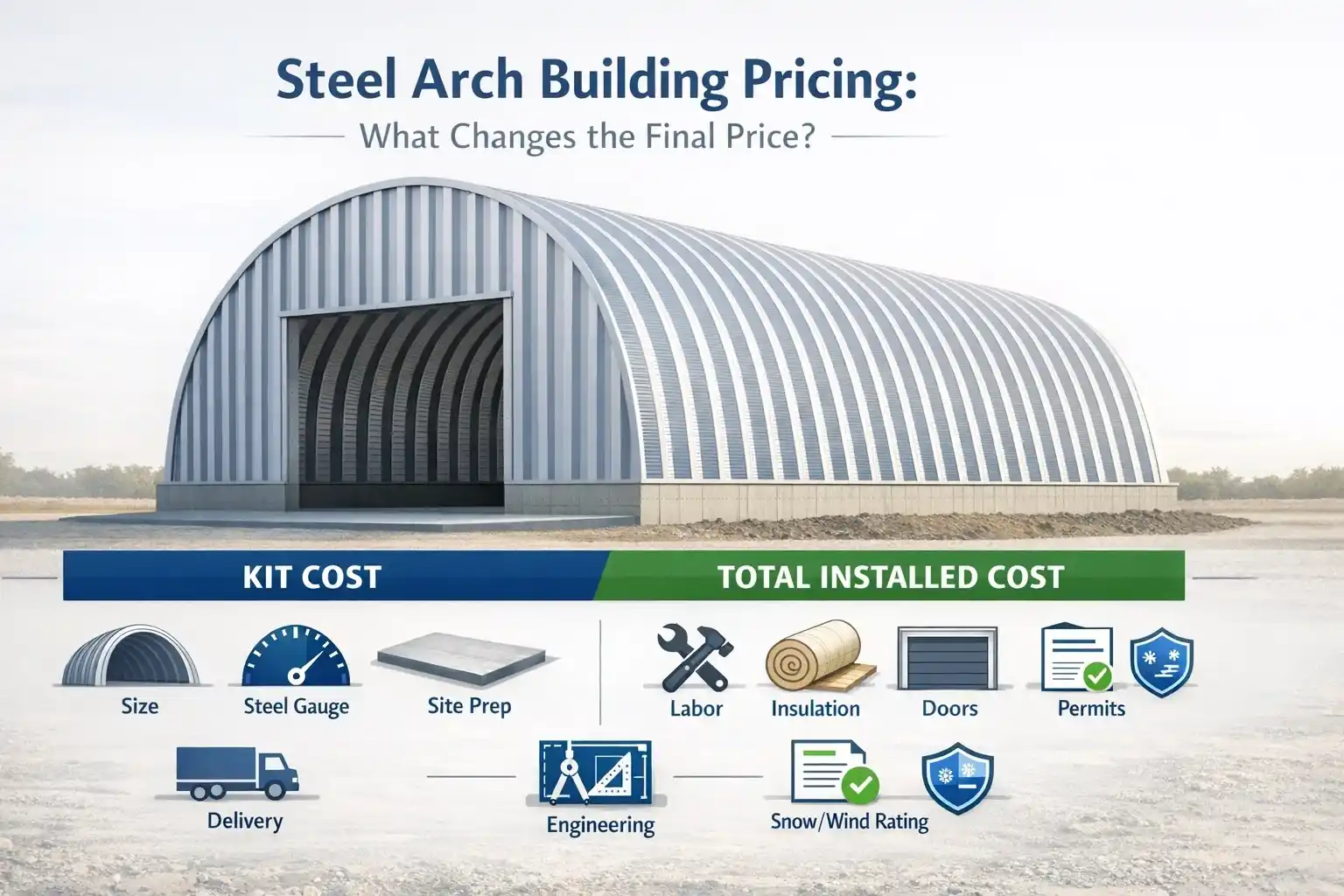
In general, many steel arch building kits fall into a broad range of $15–$35 per square foot for the kit alone, depending on span, steel thickness, and options. Once you include foundation, labor, doors, insulation, and site work, total installed pricing often lands closer to $30–$70+ per square foot for a more complete build.
That wide spread is normal. In my experience reviewing pricing sheets for different suppliers, the biggest surprise for first-time buyers is how quickly “just a kit” becomes a complete project with real construction costs.
Quonset Hut Cost Breakdown: Kit Price vs. Finished Building
Think of Quonset pricing in three layers:
Base kit (shell-only)
This typically includes the steel arches, hardware, and engineering documents. It’s the lowest entry cost and works best if you only need a simple cover for equipment, hay, or storage.
Semi-finished build
This includes the shell plus common upgrades like a framed end wall, a large overhead door, basic insulation, and site prep. Most workshop buyers end up here.
Fully finished structure
This is where the cost rises: interior walls, wiring, lighting, HVAC, plumbing, office space, and higher-end insulation systems. At this stage, your Quonset is basically a modern building—just with an arched roof.
Steel Arch Building Pricing: What Drives the Final Number?
Pricing depends on your goals, location, and how you plan to use the structure. Below are the factors that most directly change the final cost.
Size, span, and length (the biggest price mover)
Bigger buildings cost more overall, but the price per square foot can improve with size. A small 20×20 can be expensive per square foot compared to a 30×40, because fixed costs like delivery, equipment, and labor don’t shrink much.
Span also matters. A wider arch typically requires stronger design and more material.
Steel thickness and building load requirements
Not all kits are equal. Steel gauge, coatings, and the engineering design for snow and wind loads can change pricing fast. A building rated for heavy snow loads will usually cost more than one designed for mild climates.
Openings: doors, framed ends, and windows
A simple open end is cheaper than a framed end wall with a wide overhead door and man door. More cutouts and framing generally increase labor and material cost.
Large doors (especially insulated overhead doors) are one of the quickest ways to increase your project total, but they’re often necessary if you want to park vehicles, tractors, or trailers inside.
Foundation type and site conditions
Your foundation can cost as much as the kit (and sometimes more). Common options include a concrete slab, grade beam, or stem wall.
If your site has poor soil, needs grading, or requires extra drainage work, your “prefabricated Quonset kits cost” can jump significantly because the land needs to be build-ready before the first panel arrives.
Insulation and condensation control
Uninsulated Quonset buildings can sweat inside, especially with temperature swings. Condensation control is one of the most overlooked pricing factors.
Basic solutions include spray foam or insulated liner systems. If you plan to work inside year-round, insulation is usually worth it—but it affects both material cost and labor time.
Interior build-out and utilities
A storage shell is one thing. A workshop with power, lighting, outlets, climate control, and interior walls is another. This is where “cheap kit pricing” becomes a larger investment—but also where the building becomes genuinely useful.
Location, shipping, and permit requirements
Shipping varies by distance and delivery access. Permits vary by county and use type.
Some areas require stamped engineering plans, higher wind ratings, or specific anchoring methods. Those are legitimate requirements, and they change the final price even when the building size stays identical.
Quonset Structure Price Estimates: Quick Examples by Common Sizes
To help you estimate realistically, here are typical “ballpark” scenarios using common sizes. These are not exact quotes, but they show how totals can shift based on build level.
A 20×30 (600 sq ft) shell-only setup might start around $10,000–$20,000 for the kit, then rise to $25,000–$45,000 installed if you add a slab, a framed end wall, and one large door.
A 30×40 (1,200 sq ft) kit may land around $20,000–$40,000, while a more complete workshop-style build often reaches $45,000–$85,000+ depending on site prep, insulation, and labor rates.
A 40×60 (2,400 sq ft) can be a great value per square foot, but it’s a bigger project. Kits may start around $40,000–$75,000, and installed totals can run $90,000–$170,000+ with utilities and upgrades.
If you want a tighter estimate, focus on your “must-haves” first: foundation type, door sizes, insulation plan, and intended use.
Hidden Costs That Affect Quonset Kit Pricing Factors
Even careful buyers forget these:
Concrete and rebar prices fluctuate, which impacts slab totals dramatically. Site work like grading, gravel, and drainage can become a major line item. Equipment rental (lift, skid steer, concrete finishing tools) adds up if you’re DIY installing. And if you’re adding plumbing or HVAC, those trades can quickly push a basic storage building into a much higher finished cost bracket.
This is why comparing quotes requires consistent assumptions. Two quotes can look “far apart,” but one may include items the other excludes.
How to Get an Accurate Estimate for Quonset Structures
The fastest way to avoid budget surprises is to build a simple checklist before requesting quotes. Know your target size, your location, and whether you need insulation and large doors.
Then ask suppliers and contractors to quote the same scope: shell-only, semi-finished, or fully finished. When you compare apples to apples, the pricing becomes much easier to evaluate.
Finally, get clarity on what’s included: engineering plans, anchor system, delivery, and warranty. Those details matter as much as the base price.
FAQs
Are Quonset huts cheaper than traditional buildings?
They can be cheaper for simple storage or a basic shell, especially when you avoid heavy interior finishing. However, once you add insulation, utilities, and interior work, costs can get closer to conventional construction depending on your area.
What is the average cost per square foot for a Quonset building?
Many kit-only prices fall around $15–$35 per square foot, while installed totals commonly land around $30–$70+ per square foot depending on foundation, labor, and build-out level.
Do I need a concrete slab for a Quonset hut?
Not always, but many buyers choose a slab for stability and long-term durability. Your climate, soil condition, and intended use will influence the best foundation choice.
How much do doors impact the final cost?
Doors can significantly raise your total, especially large overhead doors or insulated options. They’re often one of the top upgrade expenses after the foundation.
What’s the best way to lower Quonset building costs?
Keep the design simple, reduce custom openings, compare foundation options, and avoid overbuilding for loads you don’t need. Planning for future upgrades can also help you build in phases.
Final Thoughts: Smart Pricing Starts With Smart Planning
Steel arch building pricing is flexible, which is great—but it also means your final cost depends on decisions that aren’t obvious at first glance. When you view Quonset building price ranges and understand Quonset kit pricing factors, you can quickly tell whether a quote is truly a good deal or simply missing key parts of the build.
If you define your use case clearly (storage, workshop, or finished space) and price the foundation, doors, insulation, and site prep early, you’ll get a far more accurate estimate for Quonset structures—and you’ll avoid the budget shocks that catch most first-time buyers.