
Early Home Tweaks That Change the Vibe Right Away

Moving into a new place comes with a short window where everything still feels adjustable. Boxes are around, nothing feels locked in, and there’s this quiet sense that the house hasn’t decided what it is yet. In this moment, small tweaks carry real weight. Not because they are dramatic, but because they shape how the space starts behaving day to day.
Those early changes tend to stick. The way you walk through a room, where you pause, and how easy it feels to move around all start forming habits almost immediately. If a home feels awkward at first, people often work around it without realizing they’re doing so. When it feels good early on, routines settle naturally.
Placing Large Furniture with Intention
Big furniture sets the rules for a room. Sofas, beds, tables, and dressers quietly decide how you move, where you sit, and how open or closed a space feels. Once those pieces land, everything else follows their lead. If they feel slightly off, the room never quite relaxes.
During move-in, there’s a rare chance to get this right without strain. Having local movers help test placement while heavy pieces are still in motion makes a huge difference. They already understand how to maneuver large items safely and quickly, which keeps the process smooth. It lets you feel the room before committing. A couch shifts a few inches, a bed rotates, and a table moves closer to natural walkways. Such small decisions save weeks of mental friction later.
Resetting Room Purpose Based on Real Use
Rooms often come with assumed labels. Guest room. Dining room. Office. Once people start living there, those labels don’t always hold up. A room might quietly become a reading space, a catch-all, or a place where everyone naturally ends up at night.
Resetting the purpose early helps the home feel honest. Instead of forcing a room into an idea, people allow it to match how it’s actually being used. It also makes furniture placement, storage choices, and lighting decisions feel obvious rather than forced.
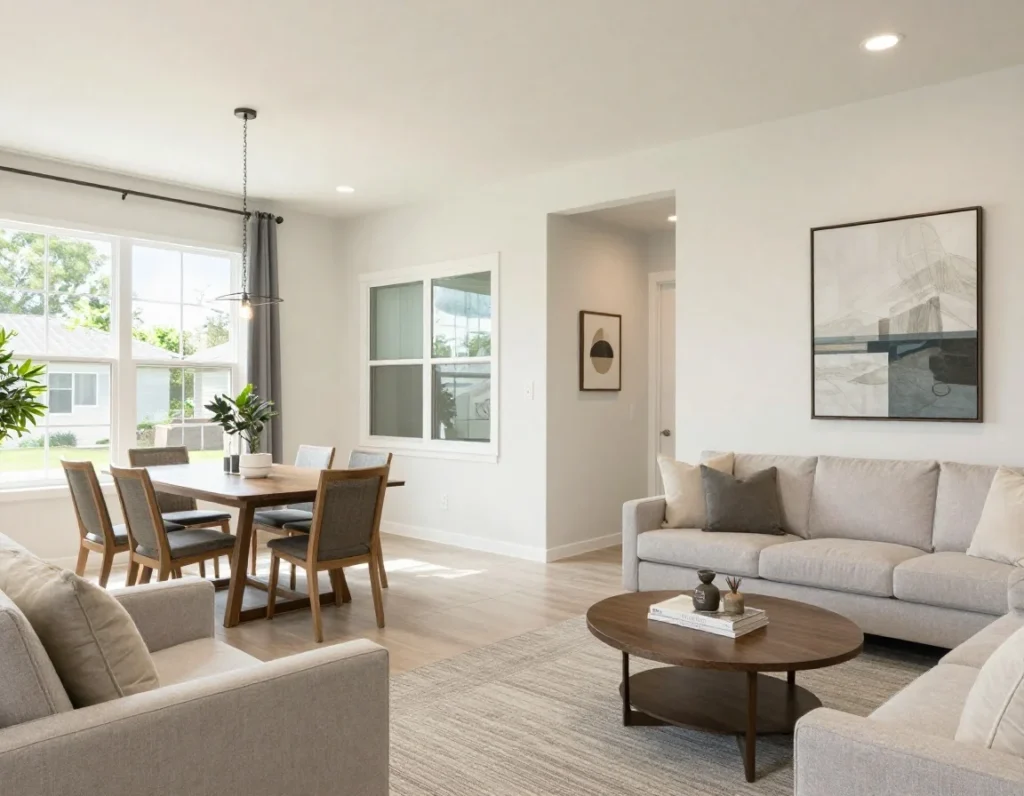
Creating a Clear Focal Point in Living Areas
Living rooms feel scattered when nothing leads the eye. A room settles once there’s one clear place that everything naturally faces or gathers around.
Once this anchor exists, the rest falls into place. Seating feels intentional. Walkways open up. The room stops feeling busy even if nothing was removed. Establishing a focal point early keeps the space from drifting into an awkward layout that never quite feels right.
Clearing Entryway Clutter for Instant Impact
The entryway is the first thing you see when you walk in and the last thing you pass on the way out. If it feels cluttered, the whole house feels heavier than it should.
Clearing that space early changes the vibe immediately. Shoes, bags, boxes, and random items tend to pile up fast. Removing excess gives the home a cleaner start and makes coming and going feel smoother. It’s a small reset that carries through the rest of the space.
Reworking Bedroom Layout for Rest and Flow
Bedrooms need to feel calm without trying too hard. Layout plays a big role in that. How you move around the bed, where light falls, and how open the space feels all affect rest more than people realize.
Adjusting the layout early helps the room settle into something comfortable. Walking paths feel natural. The room feels easier to use at night and in the morning. Once that happens, the bedroom stops feeling like a temporary setup and starts feeling like a place meant for rest.
Repositioning Rugs to Set the Flow
Rugs decide how a room gets used. When a rug is slightly off, walking paths feel awkward, and seating areas feel disconnected. People may not notice why a room feels strange, but they feel it every time they move through it.
Shifting a rug just a few inches can change everything. Walking paths open up. Seating starts to feel intentional. The room suddenly feels calmer without adding or removing anything.
Editing Open Shelving to Reduce Visual Noise
Open shelving has a way of filling up fast, especially right after a move. Boxes get unpacked, items land wherever they fit, and suddenly the room feels busy even when it’s clean. This visual noise creates low-level tension that’s easy to ignore but hard to shake.
Editing shelves early helps reset the room. Fewer items allow the space to breathe. Things feel easier to find and easier to live with. Once shelves feel balanced, the entire room settles down.
Introducing Accent Colors That Tie Rooms Together
Accent colors work best when they show up quietly across the home. One pillow here, a throw there, a small detail in another room. Once those colors repeat naturally, the house starts to feel connected without trying.
Adding accents helps rooms feel like they belong to the same place. It creates continuity as you move from space to space. The home stops feeling like separate rooms and starts feeling like one environment.
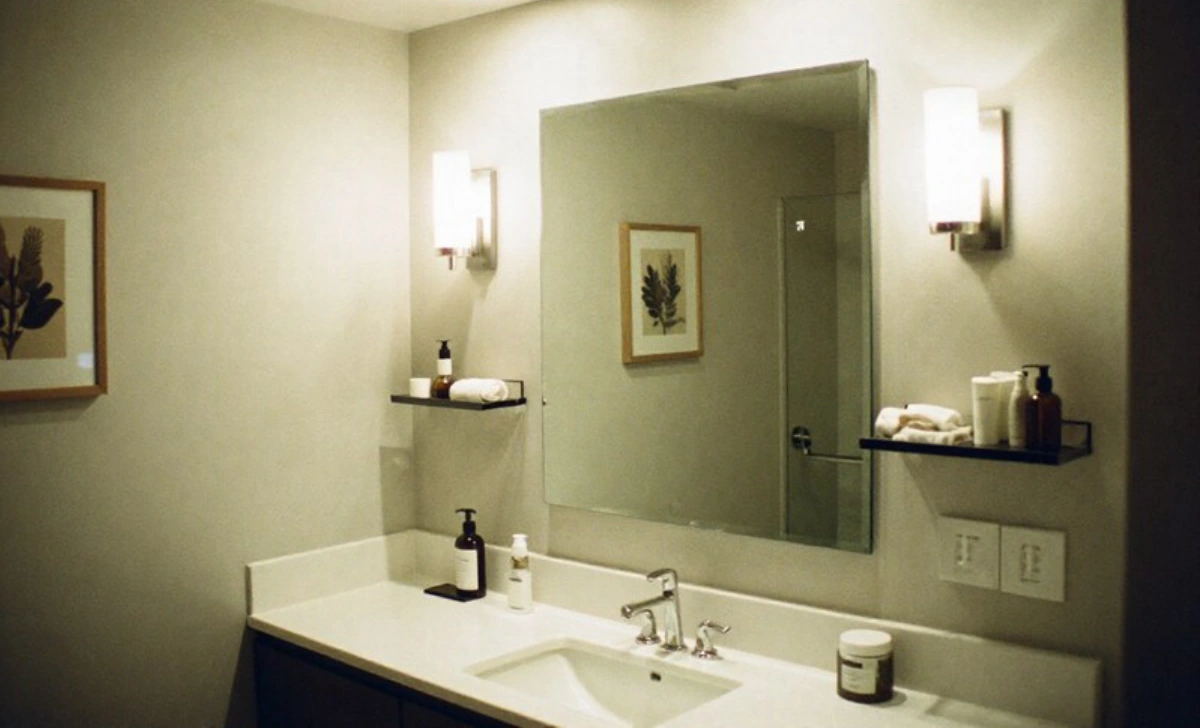
Updating Bathroom Accessories for a Quick Reset
Bathrooms respond quickly to small changes. Accessories take up little space but get used constantly. When they don’t match or feel temporary, the whole room feels unfinished.
Swapping in cohesive accessories early helps the bathroom feel intentional. It’s an easy way to make the space feel cared for without touching anything permanent. Daily routines feel smoother once the room feels put together rather than improvised.
Replacing Outdated Light Fixtures Where Life Happens Most
Lighting affects mood more than people expect. Old or harsh fixtures in high-traffic areas make rooms feel tired, even when everything else looks fine. Those lights set the tone every time someone walks through the space.
Replacing fixtures in key areas creates an immediate shift. The room feels warmer, more current, and more comfortable to spend time in.
Removing Previous Owner or Staging Elements
Nothing keeps a home feeling temporary like leftover items from someone else. Staging decor, old hooks, random fixtures, or unused shelving quietly remind you that the space hasn’t fully changed hands yet.
Clearing those elements helps the home feel personal. Once they’re gone, the space opens up emotionally. The house starts reflecting current routines instead of past ones.
Early home tweaks shape how a space feels long before big projects ever come into play. Small decisions around layout, flow, light, and visual clarity influence daily routines in ways people feel right away. When those tweaks happen early, the home settles faster and feels easier to live in.